


Browsing Category
Power Generation
30 posts

A network for the future; Examining the electricity infrastructure in the world’s second-largest economy
China has established itself as the world’s largest energy producer and consumer in recent decades with the extensive development of its electricity infrastructure. Rapid industrial growth, urbanization, and increasing household electricity demand have necessitated massive investments in traditional and renewable power plants, high-voltage transmission lines, and distribution networks. These investments not only ensure energy security…
| log in

The beating heart of the energy flow; The process of upgrading energy and power infrastructure and achieving a sustainable grid in Australia
Australia has been steadily developing its energy infrastructure for more than a century. This process began with early coal and hydroelectric power stations and expanded as population and industry grew, electricity grids and transmission lines. In recent decades, a focus on renewable energy, battery energy storage and smart grids has strengthened the country’s move towards…
| log in

On the path to competition; UK power infrastructure architecture and energy security
With a history of industrial development, heavy investment and technological transformation, the UK’s electricity infrastructure has been moving towards a future based on clean energy, high efficiency and global competitiveness in the last decade; a network that is built from a combination of diverse sources such as wind, solar, nuclear and biomass energy, and while…
| log in

Designing a sustainable future; The evolution of power plant infrastructure and energy production sources in Poland
Poland’s power infrastructure has been undergoing a crucial period of structural and technological restructuring in recent years, as the heavy shadow of its historical dependence on coal has gradually given way to a more diverse energy mix, and national policies are seeking to create a new architecture of resilience, sustainability and energy efficiency within the…
| log in

On the path to regeneration; The trend of power plant capacity development in Switzerland
In an era when energy sustainability is considered the foundation for economic stability, industrial resilience, and geopolitical independence of countries, Swiss policymakers have been able to create a structure of power generation and consumption that has distinctive features in the European energy generation structure, relying on a measured combination of hydroelectric capacities, new renewable energy…
| log in
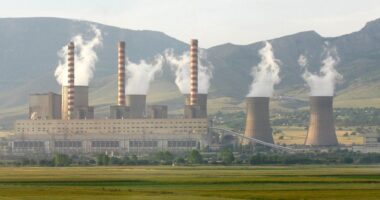
On the path to renovation; Greece’s role in developing power plant infrastructure
The construction and renovation of power plants and the increase in their capacity in Greece, as one of the strategic regions in the world, have gained a significant role, and electrification trends and the emphasis on power generation from renewable sources have also been influential in development of the country’s power plant capacities in the…
| log in

The powerful combination; Denmark’s power infrastructure development dominated by renewable energy sources
Denmark’s development and expansion of its power infrastructure, with a strong reliance on sustainable sources, makes it a key leader in the transition to green energy. Indeed, while Denmark has relied on fossil fuel sources, particularly coal, natural gas and oil, for most of its history, the country has been significantly reducing the share of…
| log in

Sustainable puzzle; The path of transformation, development, and evolution of power plants in Japan
Japan has been developing a power grid to meet the growing demand for electricity in its growing economy for more than a century. Although nuclear power has historically provided a significant portion of the country’s electricity mix, its share in the world has been largely filled by fossil fuel sources over the past decade, following…
| log in

Innovative matrix; The historical path of the development of power plants in Brazil
The development of power plants in Brazil, from the construction of early steam engines in the late 19th century to the construction of large-scale hydroelectric power plants during the 20th century, has responded to the increasing demand of the country’s population for electricity. Meanwhile it seems that the country’s electricity mix comes from a variety…
| log in

An innovation for tomorrow; An overview of evolving landscape of hydrogen power plants in the world
Today, most countries in the world are taking steps to reduce carbon emissions and transition to cleaner energy sources. Considering that green hydrogen, which is based on renewable energy sources, is considered as a sustainable energy carrier that offers significant potential and versatility in its decarbonization, it is introduced as a potential replacement for traditional…
| log in


