


Browsing Category
Energy
55 posts
Subcategories
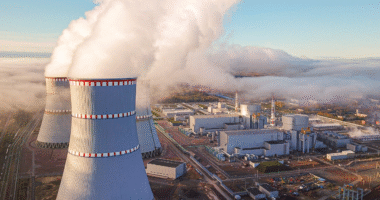
A Sustainable Power For The Future; Development Trends of Russia’s Power Plant Capacities and Its Impact on the Metals Consumption Market
Over the past two decades, Russia has experienced a steady increase in power plant capacities, a trend driven by economic growth, rising electricity consumption, and the need to modernize energy infrastructure. Gas, nuclear, and hydroelectric power plants continue to serve as the main pillars of the country’s electricity generation, collectively accounting for the majority of…
| log in
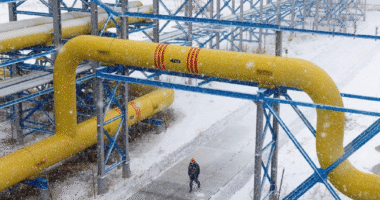
Wealth Transfer Pipelines; How Russia Shapes the Gas Market with Its Extensive Pipeline Network?
Russia, as the holder of nearly one-fifth of the world’s proven gas reserves, has a strategic role in the global energy market. The development of the country’s gas infrastructure, including an extensive network of domestic and international pipelines, compression stations, and storage facilities, plays a key role in securing domestic energy supply and boosting exports.…
| log in

From coal to the sun; Analysis of developments in India’s power plant infrastructure and investment trends in this area
India, as one of the most populous nations and fastest-growing economies in the world, possesses one of the largest power generation networks globally. The country’s installed power capacity was estimated at around 475 gigawatts by 2024, encompassing thermal, hydro, nuclear, and renewable power plants. Although the share of solar and wind energy in India’s power…
| log in

A blend of culture and industry; Estimation of metal consumption in India’s furniture industry
In recent years, India’s furniture industry has emerged as a dynamic and rapidly expanding sector of the country’s economy, leveraging a combination of modern design, traditional craftsmanship, and growing export markets. The development of urban infrastructure, rising household incomes, and the growth of the tourism industry have all contributed to increased demand for residential and…
| log in

Technology on top; Reviewing evolution and historical presence of hydrogen energy in the world
From the early days of its introduction by Henry Cavendish in 1776 to its use as a fuel for long-range vehicles and spacecraft and heating systems, hydrogen has enjoyed a wide range of applications in human societies. However, benefits of hydrogen seem to go beyond these, as today it has emerged as a key player…
| log in

China and the sustainable energy path: A review of oil and gas infrastructure in China
As the world’s second-largest economy, China prioritizes developing its oil and gas infrastructure. Despite having domestic resources, the country remains a major energy importer, making the expansion of pipeline networks, storage, and refining facilities crucial for its energy security and industrial sustainability. The length of pipelines has been increasing in recent decades, and large-scale investments,…
| log in

A network for the future; Examining the electricity infrastructure in the world’s second-largest economy
China has established itself as the world’s largest energy producer and consumer in recent decades with the extensive development of its electricity infrastructure. Rapid industrial growth, urbanization, and increasing household electricity demand have necessitated massive investments in traditional and renewable power plants, high-voltage transmission lines, and distribution networks. These investments not only ensure energy security…
| log in

The beating heart of the energy flow; The process of upgrading energy and power infrastructure and achieving a sustainable grid in Australia
Australia has been steadily developing its energy infrastructure for more than a century. This process began with early coal and hydroelectric power stations and expanded as population and industry grew, electricity grids and transmission lines. In recent decades, a focus on renewable energy, battery energy storage and smart grids has strengthened the country’s move towards…
| log in

The key to success; The key role of air, gas and communications infrastructure in UK’s energy security
The development of the UK’s air, gas and communications infrastructure has played a key role in the country’s economic growth, energy security and digital transformation in recent decades. Air infrastructure has strengthened international connections by improving cargo and passenger capacity. In the gas sector, the expansion of LNG terminals and storage centres has managed dependence…
| log in

On the path to competition; UK power infrastructure architecture and energy security
With a history of industrial development, heavy investment and technological transformation, the UK’s electricity infrastructure has been moving towards a future based on clean energy, high efficiency and global competitiveness in the last decade; a network that is built from a combination of diverse sources such as wind, solar, nuclear and biomass energy, and while…
| log in


