
As a key part of the consumer economy, China’s food, beverage and tobacco industries have been on a path of sustainable growth in recent decades, relying on the vast agricultural capacity and a population of over 1.4 billion people. The development of processing chains, agricultural modernization and the expansion of the consumer market have strengthened the status of these industries in the GDP. At the same time, the developments in the beverage market and the centralized structure of the tobacco industry have given these sectors special dimensions. The important link between these industries and the metals market is evident in the packaging field, where aluminum cans and tinplate sheets for food, beverage and tobacco packaging have played a strategic role, creating a stable and growing demand for metals in China.
The vital axis
China’s food, beverage and tobacco industries play a pivotal role in the national economy and the global supply chain. They are part of a broader chain from agricultural raw material production and processing industries to retail trade, catering services and the production of beverages and tobacco products. The size of the market and the diversity of the supply and demand structure have made policy decisions, shifts in consumption patterns, and environmental pressures significantly impact the functioning and structure of this industry. Therefore, analyzing this sector is essential not only for understanding the domestic market but also for identifying import demand trends and cross-border economic impacts.
In recent years, especially in the post-COVID-19 period, China’s domestic consumption markets have shown signs of recovery and transformation. The food and food processing sectors continues to contribute significantly to the GDP derived from consumable goods and services. Relative growth has been observed in both retail sales and catering services. Despite pressures on profit margins and fluctuations in raw material prices, the overall trend indicates relative stability and emerging opportunities for expansion within the processing value chain. At the same time, the beverage market has been accompanied by significant growth and the development of digital-commerce channels, and estimates show that the size of the beverage market has been at a significant level in recent years.
In contrast, the tobacco sector in China has distinctive characteristics: tobacco production and consumption are well above the global average, and supply is centrally controlled by government agencies and large state-owned enterprises. These institutional linkages, along with the significant tax revenues generated, have complicated the regulatory environment for anti-smoking measures. The recent growth in tobacco production and sales has created a sensitive balance in economic and social policy, given public health policy objectives and international pressures to reduce consumption.
Food industry performance
China’s food, beverage and tobacco industries have been one of the most dynamic industrial sectors in the country over the past four decades, playing a decisive role in shaping domestic production and consumption patterns at various stages. The growth of this industry has progressed in line with macro-policies of food security and increasing consumer welfare, and has been able to transform from a traditional structure based on small units into a complex and modern network of large national and transnational corporations.
In the food and food processing sector, the development leap began in the 1990s, when China paved the way for value-added products by expanding investment in agricultural processing industries and developing cold chains and transportation. In recent years, the value-added of food processing industry has grown in line with China’s overall industrial sector, and official data shows that in 2023, the industry’s share of China’s total industrial output increased significantly. This trend was particularly evident in sectors such as dairy products, meat products, and processed grains, helping to establish China as one of the largest industrial food producers in the world.
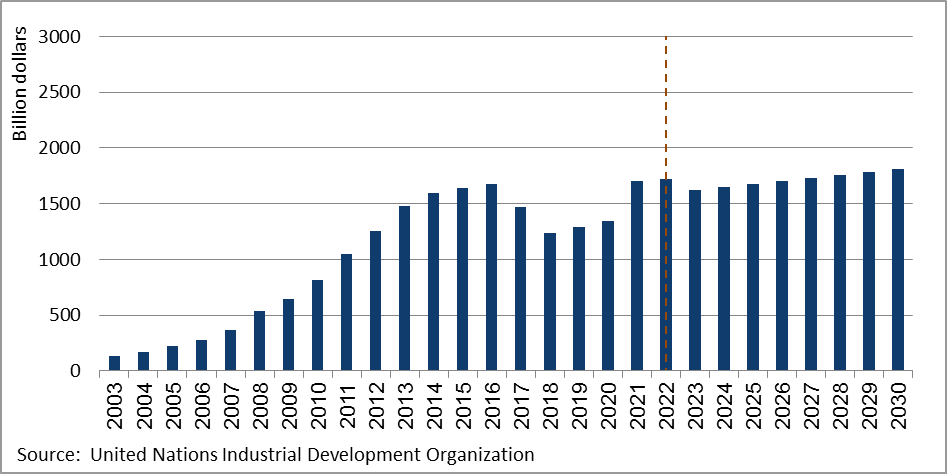 Chart 1. China’s food and beverage industries income in recent years
The main basis for this development is China’s huge agricultural capacity. With a population of over 1.4 billion, the country needs a broad and sustainable food supply chain. China is one of the world’s largest producers of grains, rice, wheat and corn, and this ability has enabled the country to source a large portion of its food and beverage industry’s raw materials domestically. In parallel, the government has invested heavily in agricultural modernization, farm mechanization, water efficiency improvement and livestock productivity in recent decades to not only maintain domestic food security but also strengthen the capacity for the growth of processing industry and export expansion. The close link between the agricultural sector and the food industry means that any changes in climatic conditions or fluctuations in agricultural production are quickly reflected in the performance of the food industry.
The beverage industry has followed a similar path, but with different characteristics. Until two decades ago, China’s beverage market was largely focused on traditional production and limited brands, but as the middle class grew and consumer tastes changed, the market has moved towards diversification, higher quality, and the introduction of new products. Since the 2010s, the growth of functional beverages, packaged waters, and non-alcoholic beverages has accelerated, increasing their share of the total market. Market reports show that the size of China’s beverage market has reached hundreds of billions of yuan in recent years, and this trend is expected to continue as online sales and digitalization of distribution networks expand. In addition, foreign and domestic investments in advanced production lines, packaging and modern marketing have helped to elevate the status of the sector.
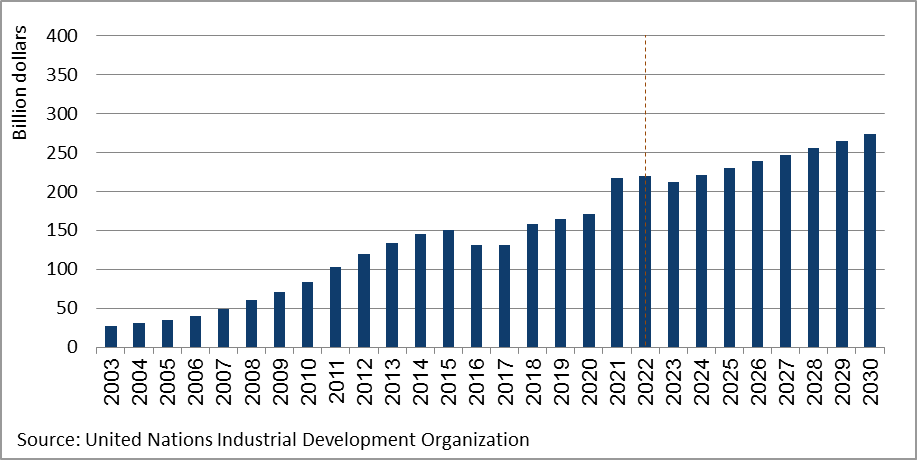 Chart 2. China’s tobacco production industry income in recent years
In contrast, the tobacco industry in China is in a unique status. Unlike many countries where growth in the sector has been severely restricted, tobacco production and consumption in China still constitute a large part of the consumer economy. The structure of the industry is highly concentrated and state-controlled, with China National Tobacco Corporation (CNTC) being the de facto world’s most important player, with over 90% of the market. According to official statistics, China is the world’s largest producer and consumer of tobacco products, and the sector contributes a large share of government tax revenues. However, in the past decade, increasing public health policy pressures and international recommendations have slowed domestic consumption growth, although production capacity remains very high.
A review of statistics also confirms the significant leap in the performance of China’s food, beverage, and tobacco industries over the past two decades. Estimates show that the revenue of China’s food and beverage industries, which did not even reach $200 billion before 2005, exceeded $1 trillion in 2011, and after experiencing a temporary halt in its growth path in 2019 and declining to $1.29 trillion, it entered an upward trajectory again and reached $1.7 trillion in 2022.
It is worth noting that, given this trend, as well as China’s economic and demographic prospects in the coming years, the revenue of the aforementioned industries is expected to increase to $1.8 trillion by 2030. Chart one depicts the revenue of China’s food and beverage production industries.
The tobacco industry in China has also experienced a significant jump in the aforementioned period. According to statistics, the revenue of the tobacco and tobacco products industries in this country, which was less than $30 billion in 2003, has increased to more than $219 billion in 2022, and given this increasing growth trend, the revenue of these industries is expected to increase to $273.8 billion in 2030. Chart 2 depicts the revenue of China’s tobacco and tobacco products industries.
Overall, the food, beverage and tobacco industries constitute one of the vital pillars of China’s economy, not only in terms of production volume and value added, but also in terms of extensive linkages with agriculture, packaging, machinery and logistics. The existence of a huge population with an increasing need for food, beverage and other consumable goods ensures stable demand for these industries, and their continuous development has helped create jobs, stimulate domestic and foreign investment, and increase the diversity of citizens’ consumption baskets. Historical trends show that despite challenges such as fluctuating raw material prices, environmental pressures and changes in demand patterns, the overall growth trajectory of these industries has remained upward and stable.
Metal consumption
Packaging in the food and beverage industries is not only a supplementary production step, but also an important part of the value chain, which directly affects product shelf life, supply quality, logistics efficiency and even brand image. In China, with the growth of the population and the transformation of lifestyle, the packaging market has become one of the largest areas of consumption of industrial raw materials. Metals, especially tin-plated steel and aluminum, have a strategic status among them, because the combination of strength, ductility, corrosion resistance and recyclability has made them the main packaging materials in the food, beverage and tobacco industries. In the food sector, metal cans are widely used to store canned goods, meat products, ready-made foods, and some dairy items. Tinplate accounts for a major share of these packages due to its anti-corrosion properties and safety in contact with food. The increasing demand for ready-made and semi-prepared foods in Chinese cities has significantly increased the consumption of this type of steel sheet.
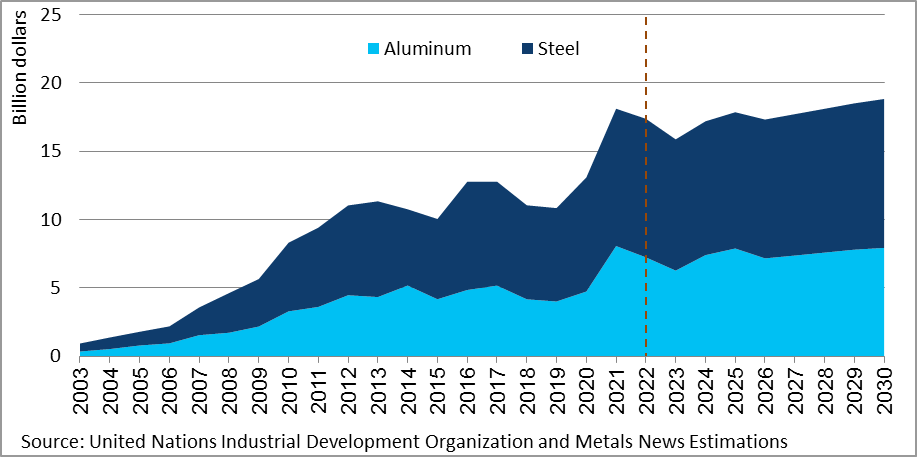 Chart 3. Consumption value of metal in China’s food, beverage, and tobacco industries