
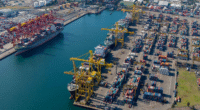
The economy of Australia exemplifies the dual interplay of natural endowments and strategic policymaking. Despite its relatively small population, the country has leveraged its abundant natural resources to achieve a high standard of living, while gradually transitioning its production structure toward a service-oriented model. This structural transformation is the result of years of focus on resource exports and the growth of the services sector, which today accounts for a major share of GDP, while the manufacturing sector has maintained a smaller but strategic share.
The share of manufacturing in the total economy has declined, with industrial production now accounting for less than 9% of GDP, a figure that reflects the shrinking size of industry relative to services, but does not necessarily mean that manufacturing is less important. Australia’s manufacturing industry is redefining its role towards higher value-added goods, advanced manufacturing and industries that are synergistic with services and research and development. This transition necessitates targeted policies to preserve manufacturing capacity, enhance access to export markets, and promote investment in technological capabilities, a trajectory that has positioned Australia not only as a supplier of primary resources but also as a significant consumer of metals.
Estimates also show that in line with Australia’s industrial progress and increased investments in construction and infrastructure, the consumption of steel and aluminum in the country has been increasing in recent years. For example, the consumption of steel in the country, which reached about 5.1 million tons in 2007, exceeded 6 million tons in 2010 and 7 million tons in 2023, and finally reached 7.5 million tons in 2024. The consumption of aluminum, which reached 215.1 thousand tons in 2007, exceeded 300 thousand tons in 2012 and, after experiencing a temporary decline in 2015 and 2020, finally increased to 287 thousand tons in 2024. Also, in the case of copper, estimates show that copper consumption has been about 42 thousand tons annually since 2020.
However, forecasting the future of Australia’s metal consumption market involves considerable complexity, as domestic industrial activity faces significant uncertainties. Also global price volatility, evolving trade policies, and rapid technological advancements continue to influence production dynamics. These conditions make the metal consumption pattern in the country less stable. Therefore, forecasting the future of the market is more dependent than ever on external variables and domestic strategic decisions. In this regard, the future state of the metal consumption markets in this country has been studied in three scenarios.
In the first scenario, it is assumed that the conditions governing the consumer industries and the trends in the construction and infrastructure of Australia in the coming years will continue according to the trend of the past few years and that no specific economic and industrial transformation will occur in this country. Under these conditions, steel consumption in Australia is forecasted to reach 7.3 million tons by 2030, while aluminum and copper consumption are expected to reach 278 thousand tons and 25 thousand tons, respectively. These figures suggest a relative stagnation in the country’s metal consumption market.
The second scenario assumes that Australia’s consumer industries output and investment in construction and infrastructure returned to their peak between 2007 and 2024, bringing the country’s industrial performance to its best ever. Under such circumstances, steel consumption is forecasted to increase to 7.9 million tons, while aluminum and copper consumption are forecasted to reach 308 thousand tons and 30 thousand tons, respectively.
In the third scenario, it is assumed that Australia’s economic growth will be achieved in accordance with the IMF’s forecasts, and the country’s GDP will increase to about $2.18 trillion in 2030, and the share of the industrial sector in the country’s GDP will change according to the trend of recent years. In such circumstances, steel consumption will increase to 8.8 million tons, and aluminum and copper consumption will reach 352 thousand tons and 37 thousand tons, respectively.